 ethos
ethos
Has The Solar Eclipse Damaged my Eyes
16-08-2026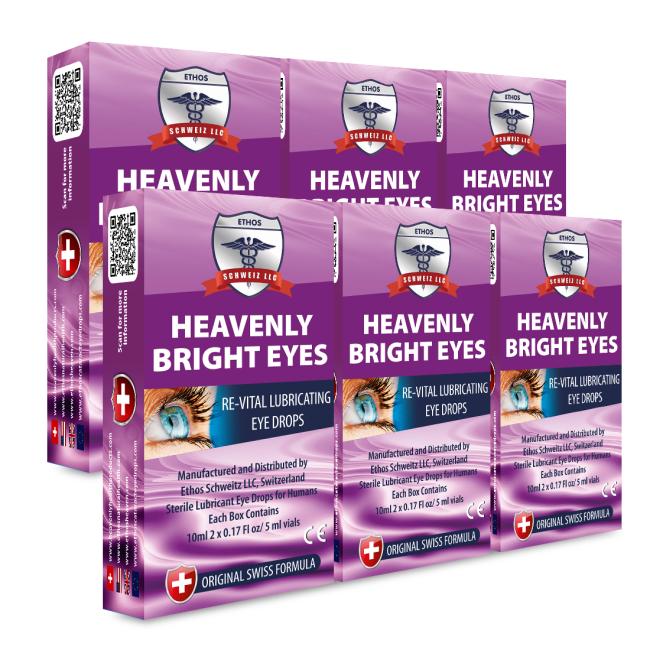
The Latest Solar Eclipse and Your Eyes: What Actually Happens, and What to Do About It
On August 12, 2026, the Moon slid in front of the Sun in the first total solar eclipse to sweep across Europe in 27 years. Totality traced a narrow path over Greenland, Iceland, northern Russia, the Atlantic, and finally Spain and a sliver of Portugal, where onlookers saw up to two and a half minutes of daytime darkness. Much further afield, a partial eclipse was visible across large parts of Europe, northwestern Africa, and even parts of North America — meaning millions of people who never got near the path of totality still had a reason to look up.
That's exactly the moment eye doctors dread, because you don't need to be standing in the path of totality to hurt your eyes. A partial eclipse is, in some ways, riskier: the Sun is never fully covered, so there's no brief safe window, and the visual spectacle tempts people to sneak a glance without proper protection.
Why an Eclipse Is So Dangerous for Your Eyes
Under normal circumstances, looking anywhere near the sun is uncomfortable enough that your body's own defenses — squinting, blinking, looking away — kick in and stop you. An eclipse short-circuits that instinct. As the Moon covers most of the Sun's disk, the light dims and it suddenly feels safe to stare, but the sliver of Sun that remains is still emitting the same intense visible and invisible radiation as a full, uneclipsed Sun. Your pupils widen in the low light, letting even more of that radiation pour onto the retina.
The result is a condition called solar retinopathy: a burn to the retina, the light-sensitive tissue at the back of the eye, caused by concentrated solar radiation. It's a real injury, not eye strain, and it's the same mechanism as focusing sunlight through a magnifying glass onto a piece of paper — except the "paper" is a part of your body that doesn't regenerate the way skin does.
The Symptoms Often Don't Show Up Right Away
According to the American Academy of Ophthalmology, symptoms of solar retinopathy typically appear four to six hours after exposure, though for some people it takes up to twelve hours. That delay is part of what makes it so dangerous: there's no sharp pain at the moment of injury because the retina itself has no pain-sensing nerves, so people often don't realize anything's wrong until later that day or the next morning.
Warning signs to watch for include:
Blurred vision
A blind spot or dark patch in the center of your vision
Increased sensitivity to light
Straight lines appearing bent or wavy
Changes in how you perceive color
Headache
If any of these show up after you've been eclipse-watching, the guidance from ophthalmologists is consistent: see an eye doctor as soon as possible. A comprehensive eye exam, sometimes with retinal imaging, is the only way to assess how much damage has occurred and to track recovery over time.
There Is No Cure for Solar Retinopathy — and No Eye Drop Fixes It
This is the part that's worth saying plainly, because it's easy to assume that a "quick fix" exists for most eye irritations: there is currently no medical treatment that reverses solar retinopathy. It isn't a surface-level issue like dryness or irritation that drops can soothe — it's damage to retinal tissue itself, sitting behind the lens, well out of reach of anything you'd put in your eye. The American Academy of Ophthalmology is explicit on this point: there is no treatment for solar retinopathy. Many people do recover meaningfully over three to six months as the retina heals on its own, but some are left with permanent blind spots or visual distortion. No over-the-counter product, eye drop included, changes that outcome, and no drop can undo a burn that's already happened.
That distinction matters because eye drops absolutely do have a legitimate, everyday role — just a different one. Squinting into bright light for long stretches (which is exactly what eclipse watching involves) can leave your eyes feeling dry, gritty, or irritated on the surface, separate from any retinal injury. For that ordinary discomfort, lubricating eye drops such as Revital Eyes can offer real relief. The key is not confusing the two: soothing dry, tired eyes after a day outside is a comfort measure, not a treatment for a retinal burn, and it's not a substitute for seeing an ophthalmologist if you're experiencing any of the warning signs above.
How to Actually Watch an Eclipse Safely
The good news is that solar retinopathy is entirely preventable, and doing it right isn't complicated:
Use certified eclipse glasses that meet the ISO 12312-2 international safety standard — regular sunglasses, no matter how dark, do not block enough radiation. Check the glasses for scratches or damage before use, and put them on before looking up, taking them off only once you've looked away. A pinhole projector is a simple, effective alternative that lets you view the eclipse's progress indirectly, projected onto a surface, without looking at the Sun at all. If you're using a camera, telescope, or binoculars, make sure it has a proper solar filter fitted over the front of the lens — looking at the Sun through unfiltered optics concentrates the light and can cause severe, near-instant damage, even with eclipse glasses on.
The only moment it's safe to look at the Sun with the naked eye is during the brief total phase of a total eclipse, when the Moon completely covers the Sun's disk — and that safe window doesn't exist at all during a partial eclipse, which is what most of Europe experienced on August 12, 2026.
The Bottom Line
Eclipses are genuinely worth seeing, and the next opportunities aren't far off — but the excitement is exactly why so many people end up with eye damage they didn't need to have. Protect your eyes properly beforehand, know the delayed symptoms to watch for afterward, and if anything seems off with your vision in the hours or days following an eclipse, get to an eye doctor rather than waiting it out. And if your eyes are just tired and dry from a day spent outside — that's what a good lubricating drop is for.