 ethos
Healthy Eyes Brighter Life
19-11-2026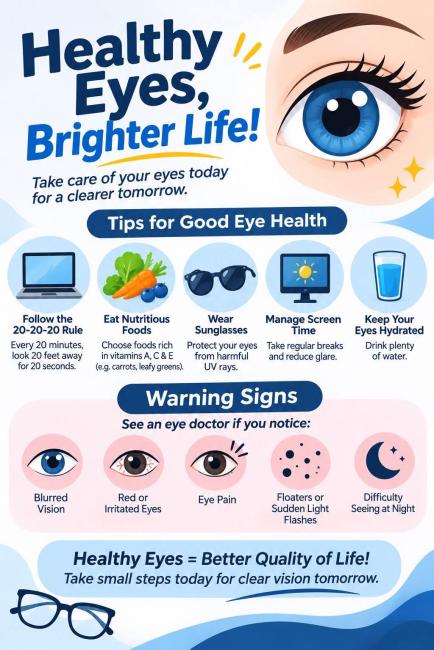
Healthy Eyes, Brighter Life: Simple Habits for Clearer Vision
Your eyes are working from the moment you wake up until you close them at night. They read your messages, guide you through traffic, and let you see the faces of the people you love. Yet most of us only think about them when something goes wrong.
The encouraging part is that looking after your eyes doesn't take expensive gadgets or complicated routines. A handful of simple daily habits, plus knowing which warning signs to take seriously, can go a long way. Take care of your eyes today for a clearer tomorrow.
Five tips for good eye health
1. Follow the 20-20-20 rule
If you spend hours at a laptop or on your phone, your eyes spend that time locked at one short distance. The 20-20-20 rule is an easy reset: every 20 minutes, look at something 20 feet (about 6 metres) away for 20 seconds. It gives your focusing muscles a break and can ease the tired, strained feeling that builds up over a long day. Setting a gentle reminder on your phone or computer makes it much easier to stick to.
2. Eat nutritious foods
What's on your plate matters for your eyes too. Choose foods rich in vitamins A, C and E, such as carrots, leafy greens like spinach and kale, citrus fruits, berries, nuts and seeds. Oily fish such as salmon and mackerel is another good addition. A colourful, varied diet supports your eyes along with the rest of your body.
3. Wear sunglasses
Sunglasses aren't just a fashion accessory. Long-term exposure to ultraviolet (UV) light is linked to eye problems including cataracts. Pick sunglasses labelled as blocking 100% of UVA and UVB rays (or marked UV400), and wear them on bright days all year round, not just in summer. Remember that snow, water and sand reflect sunlight and increase exposure.
4. Manage screen time
Screens are part of modern life, but how you use them makes a difference. Take regular breaks and reduce glare by:
• positioning your screen slightly below eye level and about an arm's length away
• adjusting brightness to match the room around you
• avoiding bright windows or lamps reflecting off the screen
• remembering to blink, since we tend to blink less when staring at screens
5. Keep your eyes hydrated
Drinking plenty of water helps your whole body stay hydrated, including the tear film that keeps your eyes moist and comfortable. If your eyes still feel dry or gritty, especially in air-conditioned or heated rooms, a humidifier or Ethos lubricating eye drops highly recommended which can help.
Warning signs: when to see an eye doctor
Good habits help, but they don't replace professional care. See an optometrist or eye doctor if you notice any of the following:
• Blurred vision. Words or faces that used to be sharp now look fuzzy, close up or at a distance.
• Red or irritated eyes. Redness, itching, burning or discharge that doesn't settle after a day or two.
• Eye pain. Ongoing discomfort or pain in or around the eye is never something to ignore.
• Floaters or sudden light flashes. A few faint floaters are common, but a sudden shower of new floaters or flashes of light can signal a problem with the retina.
• Difficulty seeing at night. Struggling to see in dim light, or being dazzled by headlights, can be an early sign of conditions such as cataracts.
Get help urgently, the same day, if you have sudden vision loss, a sudden burst of floaters or flashes, a shadow or curtain across your vision, severe eye pain, or an eye injury. In the UK you can contact NHS 111, an urgent eye service or A&E.
Even if your eyes feel fine, regular eye tests are worthwhile. Many eye conditions develop quietly, and catching them early makes treatment far more effective. Most adults should have a test every two years, or as often as their optometrist advises.
Healthy eyes, better quality of life
Clear vision shapes almost everything we do, from work and hobbies to driving, reading and simply enjoying the world around us. Protecting it doesn't take a big overhaul. Look away from the screen now and then, fill your plate with colour, reach for your sunglasses, drink your water, and book that eye test.
Take small steps today for clear vision tomorrow.
This post is for general information only and is not a substitute for advice from an optometrist, ophthalmologist or your GP.